National Museum of the American Indian
Human-Centered Design | UX/UI | Information Architecture | Visual Storytelling | Accessibility
Overview
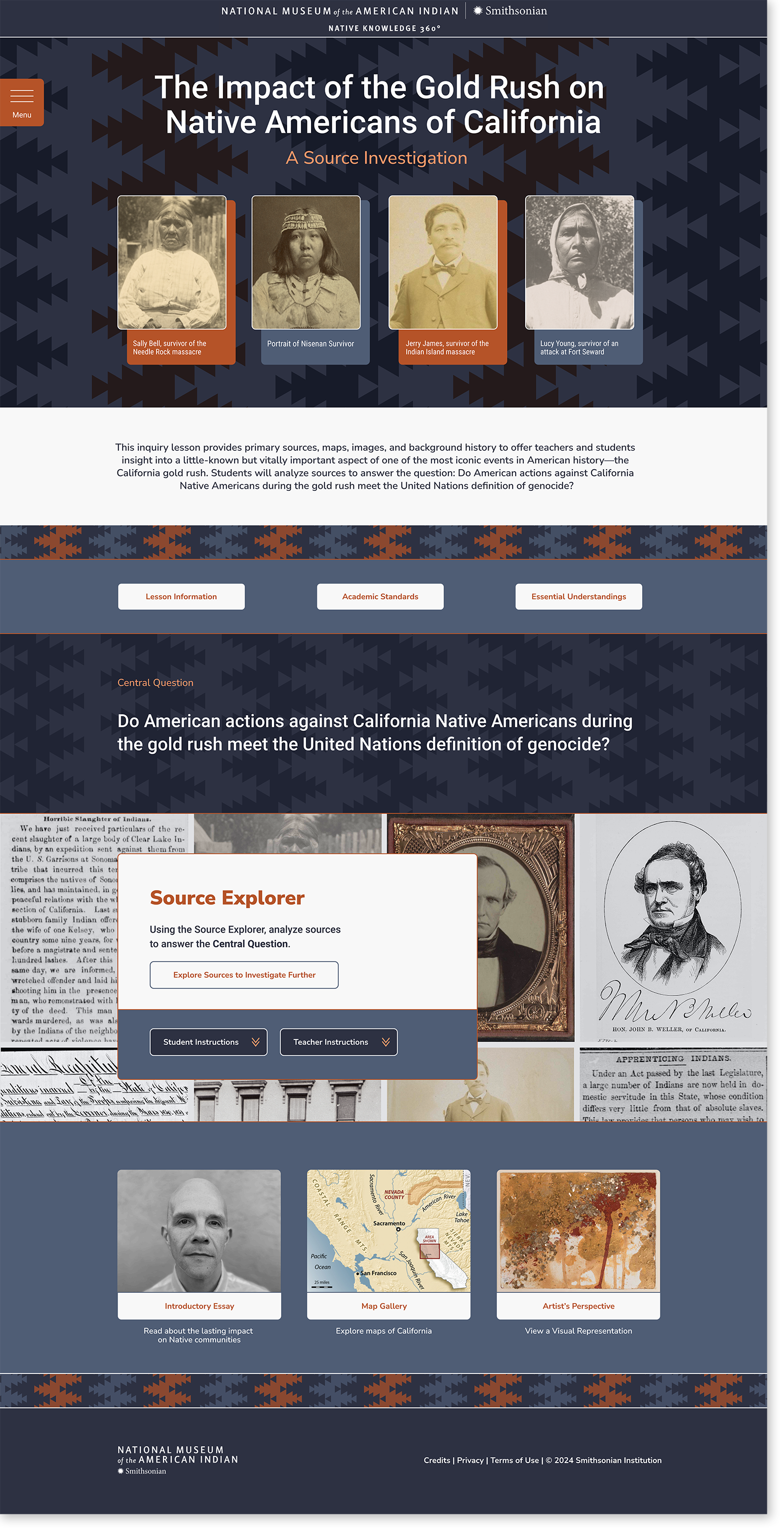
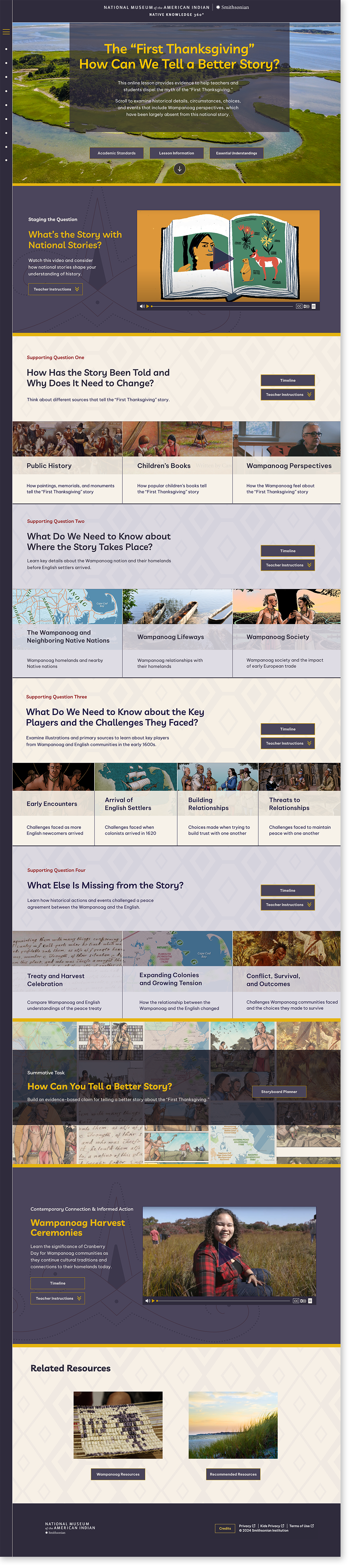
The Native Knowledge 360° Gold Rush Educational Website is an interactive learning experience developed for the Smithsonian National Museum of the American Indian. The experience explores the California Gold Rush and “First Thanksgiving” through Native perspectives, helping students and educators understand its impact on Native peoples, communities, and lands.
As part of the design team at Quotient Inc., I helped translate complex historical and educational content into an engaging digital experience. My work included UX/UI design, information architecture, illustration, visual storytelling, and the development of a cohesive design system in collaboration with content strategists, subject matter experts, developers, project managers, and stakeholders.
The Challenge
The project needed to communicate a complex and sensitive historical subject while balancing educational goals, user needs, accessibility requirements, and Smithsonian standards.
A substantial amount of information had to be presented without overwhelming students or diminishing the importance of Native perspectives. The content also needed to function as interactive learning experiences rather than simply placing educational material on a screen.
The challenge was to determine how content, navigation, interaction, accessibility, and storytelling could work together to make a complex subject approachable and understandable for a diverse array of users.
Approach
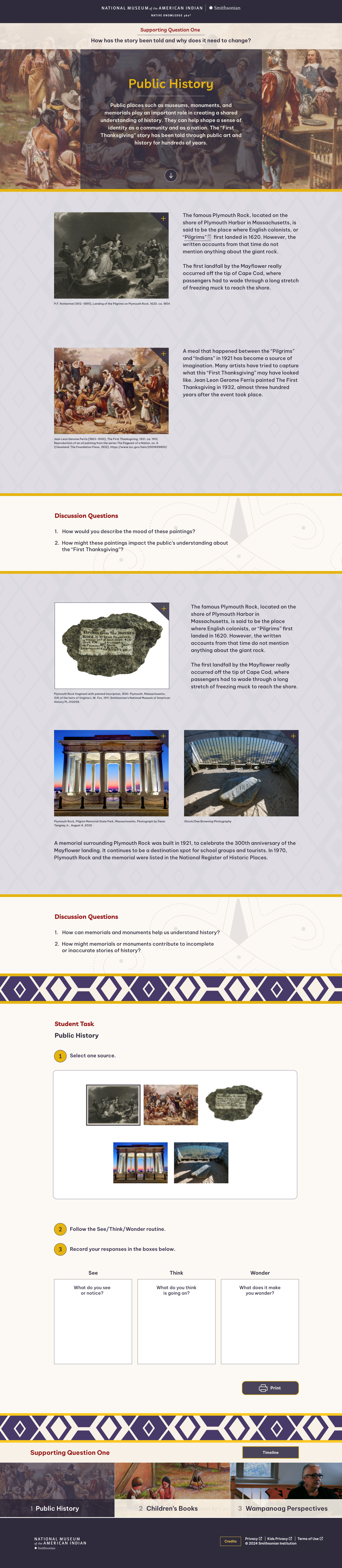
I collaborated across disciplines to translate educational content and project requirements into structured digital experiences. Information architecture and visual hierarchy helped establish relationships between content, while wireframes provided a framework for determining how students would navigate and interact with the material.
I used typography, illustration, imagery, layout, and reusable interface components to establish consistent visual systems while giving different types of content their own hierarchy and purpose.
Accessibility was integrated throughout the design process. Section 508 and WCAG principles informed decisions around readability, hierarchy, interaction, and usability to support a broad range of learners.
Rather than treating UX, visual design, and content as separate concerns, I approached them as parts of one learning experience, balancing educational objectives, historical content, audience needs, accessibility, and technical requirements.
Outcome
The final experiences transformed complex historical and educational material into cohesive, accessible digital learning environments. Students and educators could explore the Gold Rush and “First Thanksgiving” through experiences that used structure, interaction, illustration, and visual storytelling to support understanding while keeping Native perspectives central.
The projects demonstrate my ability to synthesize complex information, collaborate across disciplines, create scalable digital systems, and translate audience and educational needs into accessible human-centered experiences.